
How Arkansas’s participation in the federal program is tagging citizens as “under review”
On a spreadsheet labeled “Under Review SAVE AR,” there is a line for a woman marked United States Citizen, naturalized in 2019. Another line reads Born in NY. Both individuals appear under the same status: Case Under Review.
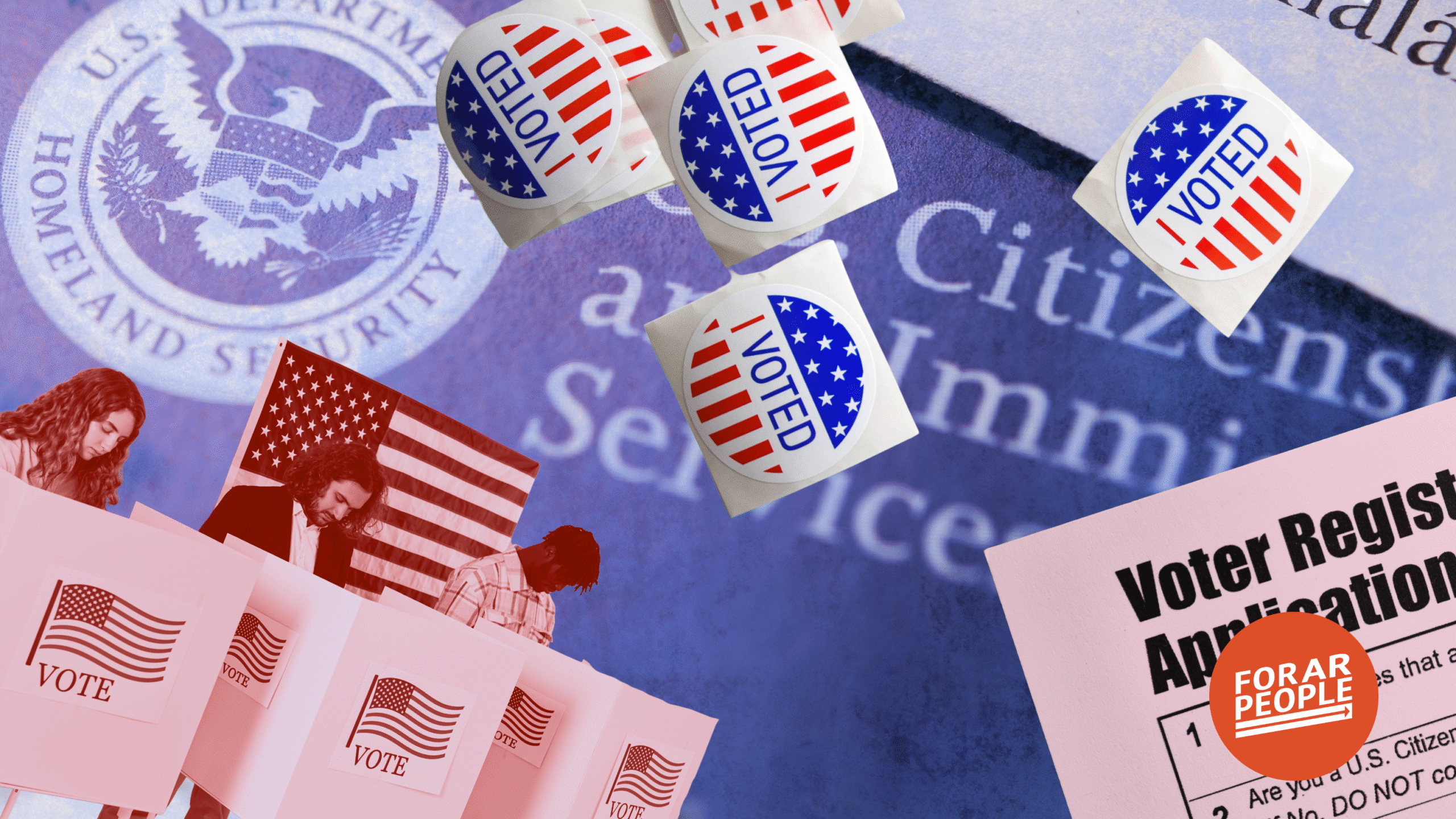
These two entries are from a document provided to For AR People by the Arkansas Secretary of State via a Freedom of Information Act request. The entries reflect a batch of names that have been processed through the federal SAVE system, or the Systematic Alien Verification for Entitlements system. SAVE is a Department of Homeland Security (DHS) database created to verify immigration status for public benefits programs.
Last year, some states voluntarily started using SAVE for the purpose of voter roll maintenance. But voting rights groups and data experts have warned that SAVE was not built for election administration. Additionally, federal systems have a documented history of outdated or incomplete naturalization records, which can lead to lawful U.S. citizens being flagged for voter roll review. In a letter to Secretaries of State, the Brennan Center for Justice warned of high error rates and data lag issues in federal immigration databases used for voter list maintenance.
This did not stop Arkansas from signing a formal agreement with DHS to use SAVE for voter registration and voter list maintenance. The agreement authorizes the state to submit identifying information such as name, date of birth, Social Security number, driver’s license number, and naturalization certificate number. Once the data is uploaded to SAVE, DHS returns immigration or citizenship status information for Arkansas’s records. The agreement makes clear that Arkansas, not DHS, determines voter eligibility. The agreement also states that DHS reserves the right to use the information Arkansas provides for any purpose permitted by law, “including but not limited to prosecution of violations of Federal administrative or criminal law.” We’ll put a pin in that for another story, though.
The spreadsheet the SOS provided shows us exactly what the state is looking for. Each entry includes a name, date of birth, case number, time stamp, voting history, and an immigration status note. Some people on the list voted in 2024, others in 2022. Several show recent naturalization dates. One entry notes United States citizen since 2006. Another specifies United States Citizen Naturalized in 2024. All are marked as Case Under Review.
This, of course, is database mismatching, which usually happens something like this:
- A person registers to vote.
- Their name is run through a federal immigration system.
- Something in the federal record does not line up cleanly.
- The case lands on a state review list.
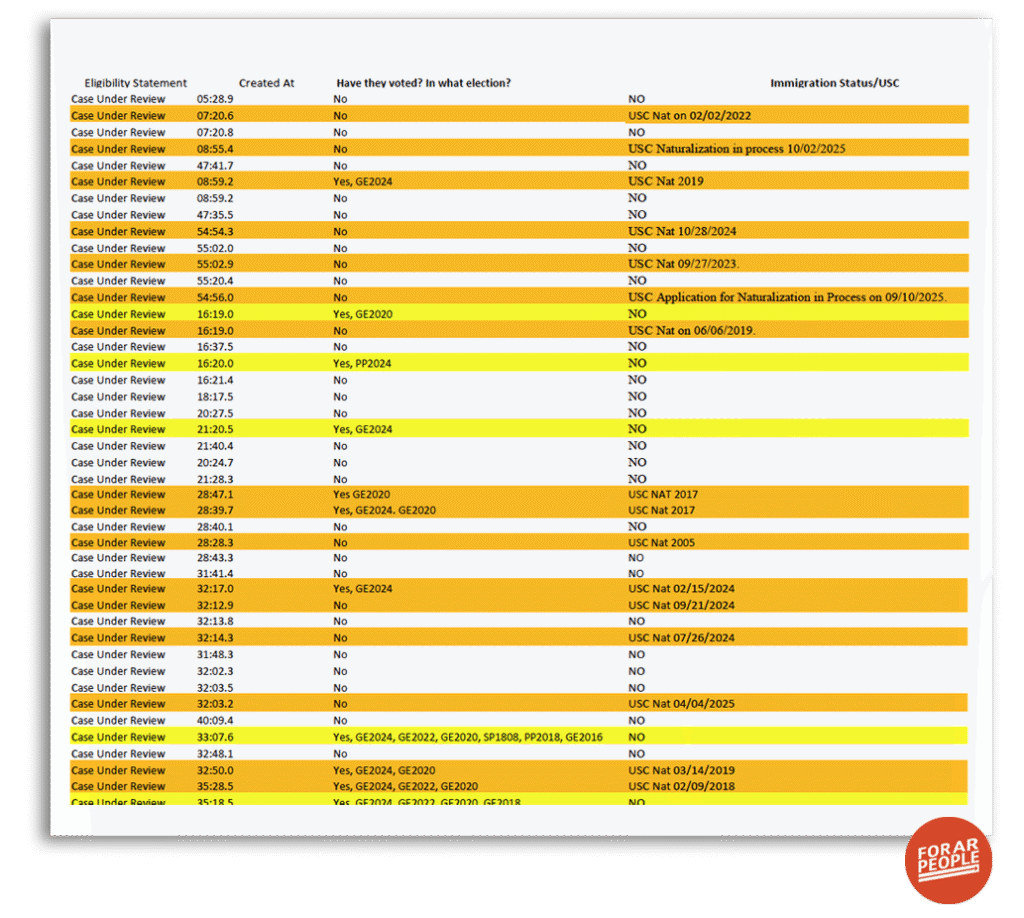
The spreadsheet shows that voter maintenance decisions require manual state review becausefederal data does not always align neatly with state voter records. Things like name changes, timing gaps, delays in updating naturalization records, and spelling variations can trigger results that flag legitimate voters as suspect.
The presence of confirmed U.S. citizens on the review list matters for a simple reason: every mismatch results in a review of records, citizenship, and a decision on whether or not to escalate the case for further action. The spreadsheet For AR People was provided does not show removal status or referrals to DHS or the Department of Justice. It only shows the review stage and that citizens are caught in it.
For voters, this is a question of accuracy. How many of these cases have been cleared? How many involve naturalized citizens? How often does SAVE produce a mismatch for someone legally eligible to vote? What notice, if any, does a voter receive before their status is questioned? Is there any kind of process to quickly prove voting eligibility if a citizen sees their status has been questioned?
For Arkansans who are naturalized citizens, who have changed their names, or who share common surnames, this is no longer abstract. Your record can land in a federal verification system, even if you have voted legally for years, and potentially limit your right to vote moving forward.
The system depends on data accuracy – right now, we can see the flags but not the outcomes, but outcomes are what we’ll be asking for next.