

If you’ve heard one thing about data centers, it’s that they’ll cause your utility rates to go up. While broadly true, the reasons have more to do with how Arkansas regulates power usage than data centers’ fundamental rate of usage. Arkansas also has some specific issues and laws that could mean a more substantial rate hike than other areas. Let’s look at the rate-setting process so we can understand how the proposed boom in data center construction may just blow it up.
It’s a twisted Webb – sorry, web – that stretches from laws passed in 2015 and 2025, a Supreme Court justice and her husband, who now controls the commission that sets our utility rates, and surprisingly, pushback from Walmart, Kroger, and other major businesses.
How do Utilities Work in Arkansas, Anyway?
At the end of the day, the Arkansas Public Service Commission (PSC) sets our utility rates. That’s the very short version. The longer version looks more like a court case, according to THV11. Nominally, the PSC represents the interests of the public to keep the utility companies from gouging prices. The utility companies submit their proposed rate to the PSC; that rate takes into account operational costs, infrastructure maintenance, and (of course) a profit margin. The PSC considers the companies’ argument, any public input, and then haggles with the companies to protect consumers and ensure that the utility companies can make a little cash.
On paper, this system works relatively well. Arkansas has a fairly low average electricity rate compared to the rest of the nation. Most folks have heard of Entergy Arkansas, the major supplier in the state, but quite a few folks receive energy from local electric cooperatives. Your rate varies from month to month because, fundamentally, sometimes power costs more! If you’re cooling a huge house on the hottest day of the year, your power company will charge you more because that’s a “peak demand” period. The PSC is supposed to protect you from seeing too much of a fluctuation from month to month and from getting hit with a massive rate hike from year to year.
Arkansas’s Insider System
Like many things in Arkansas, though, the reality has become very different underneath Sarah Sanders. A few developments make this system now insufficient, even without factoring in the data center boom.
First, Sanders appointed Doyle Webb to chair the PSC. Webb came from chairing the Republican Party of Arkansas, so not exactly a neutral voice (his wife, Barbara, is on the Arkansas Supreme Court). This is another example of two phenomena under Sanders: giving favors to friends and the broligarchy (a bunch of unaccountable men chumming it up and making essential decisions for the rest of us). Webb has been extra friendly to the utility companies and substantially less so to ratepayers.
Second, in 2025, the legislature passed the Generating Arkansas Jobs Act (GAJA). Formerly, a utility company couldn’t charge rate-payers for power plants that were under construction; the plant had to produce energy before the rate-payer got the bill. Under GAJA, however, utility companies can now charge you for power plants that are under construction.
Put another way, you’re on the hook for something that doesn’t benefit you at all.
Utility companies can now take huge strategic risks on increasing their power production infrastructure and GAJA lets them charge you for it. Companies like Entergy argue that in the long run, this formula is better for rate-payers and reduces interest cost overall, but if the power plant you got charged for never turns on, you’ve just paid for… nothing.
The GAJA rider could be costing the average Arkansas rate-payers as much as 4% more on their energy bills. Small businesses might see as much as a 7% increase, and agricultural producers – famously key to Arkansas’s economy and who aren’t exactly doing great right now – could see as much as 12% higher rates on their bills. In dollar amounts, residents saw an $5.77 per month on their bill because of this rider.
Even worse, under a different 2015 law, Entergy only has to submit public documentation about their rate schedule to the PSC every decade. You get one shot every ten years to make your case, before Mr. Webb rubber stamps a huge rate hike on your bill. This is, of course, ignoring the consistent increases under the 2015 law Entergy is allowed to make.
Why might Webb rubber stamp such an increase?
Oh, right: Entergy donated “substantial” amounts of money to his wife’s Supreme Court campaign in 2024, just two years after the former head of the PSC turned down Entergy’s proposed $142 million settlement for overcharges as a “low-ball” amount.
In February, Entergy filed an application with the PSC to raise the average customer’s electric bill by about $1.16 per month. That case is ongoing, with hearings scheduled in October and November.
Utilities and Data Centers
The new data centers coming to Arkansas also seem to be making use of the GAJA rider. When GAJA passed, legislators specifically brought up attracting data centers as a reason for passing the law. Gov. Sanders herself said that the law brought Google to Arkansas. GAJA included huge tax breaks for data center construction on top of the rider for new construction we discussed above.
These data centers require huge amounts of power, according to Congress. Entergy will have to expand power plant capacity to handle the increased load – a new solar farm will support the West Memphis Google center – but the company is being extremely cagey about just how much capacity they’ll have to add.
Let’s say it clearly: the power company supplying these data centers won’t say how much power they’ll take, and you, the rate-payer, will be on the hook for new power plant construction. The man responsible for determining the rate you pay has essentially been bribed by the power company.
Sounds pretty suspicious to us!
We should say that Entergy says, according to the Arkansas Advocate, “costs associated with providing service to the centers” won’t be shifted to residential customers, but frankly, that’s hard to believe, especially with the utter lack of transparency around the issue.
Just this week, Walmart, Kroger, other major businesses, hospitals, and the University of Arkansas system filed to intervene in Entergy’s rate case we discussed above, per the Arkansas Democrat-Gazette. They’re arguing that Entergy’s proposed rate, which includes their profit margin, is far higher than what other states like Oklahoma and Texas allow. When Walmart’s mad, folks pay attention.
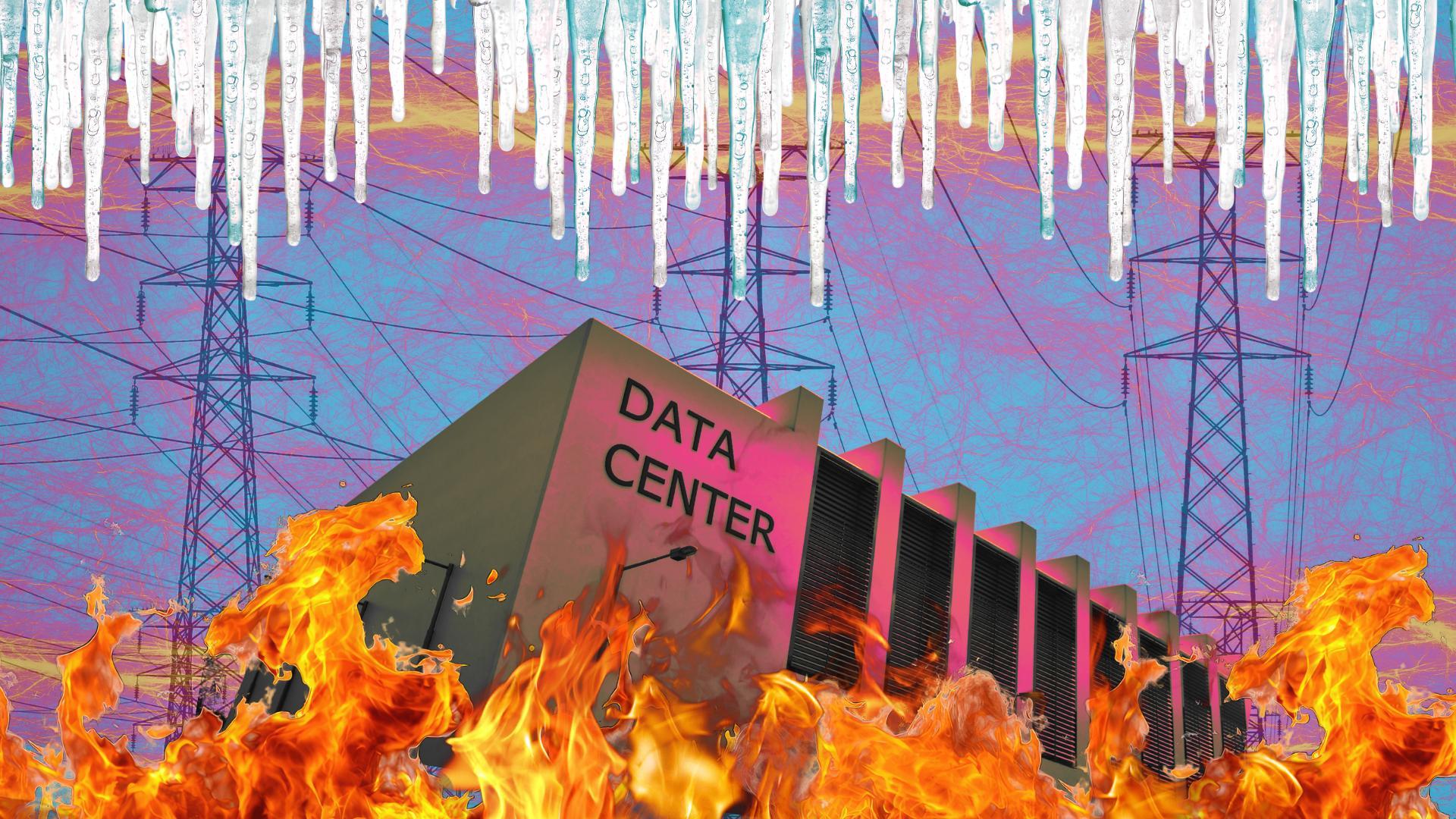
Entergy has also sworn up and down that residential customers won’t see interruptions to service. Last week, during a historic heat wave, thousands of customers had no power. This past winter during the severe snow and ice storm, thousands of customers had no power. While not as severe, it brings to mind the devastating blackouts in Texas five years ago. With the massively increased load brought by data centers, it’s hard to imagine more folks not getting brownouts or blackouts.
But hey, at least Google Gemini won’t lose power during the next major storm.