


Unregulated pregnancy centers act as pseudo healthcare clinics, absorbing millions in taxpayer dollars while the state’s healthcare infrastructure collapses.
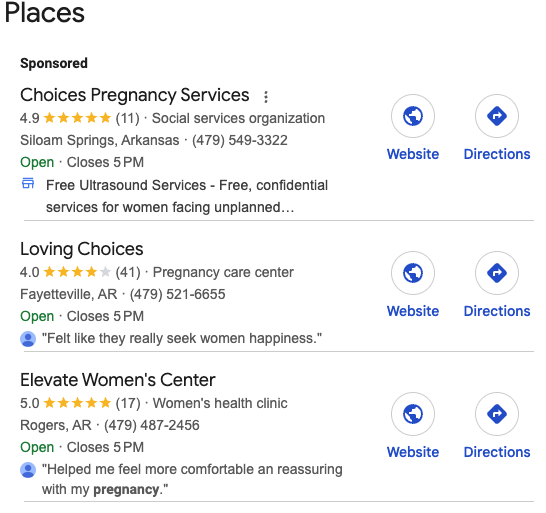
If you google “medical clinic for pregnancy in Arkansas,” the top result will seem like a clinic, but it isn’t one. The same goes for the Arkansas Department of Health, the state’s main healthcare entity. In their directory for pregnancy healthcare services, you’ll find a list of pretend clinics alongside legitimate county health department providers.
Arkansas has one of the highest maternal mortality rates in the country, meaning more women will die here in childbirth or shortly after childbirth than nearly every other state in the nation. Meanwhile, Arkansas is in the midst of a bigger healthcare crisis, plagued with a crumbling hospital infrastructure and rural healthcare deserts – especially for pregnant women.
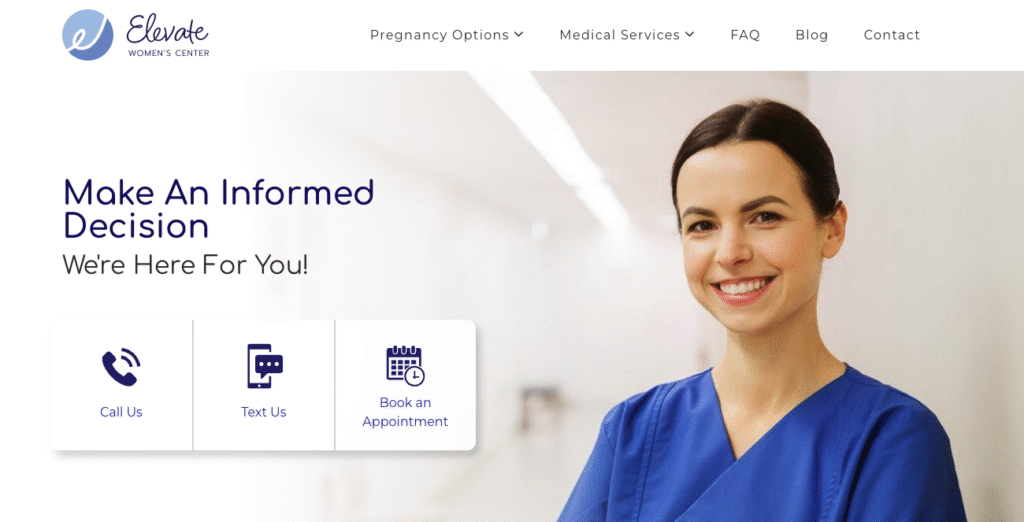
But instead of tackling these problems head on with data-driven solutions, the state is giving away millions in taxpayer dollars each year to unregulated pregnancy centers (UPCs), also called crisis pregnancy centers. The primary purpose of these UPCs is to dissuade someone from terminating a pregnancy. Regardless of the politics around abortion, these locations mask themselves as medical facilities while evading medical oversight, hoarding private healthcare data, and ignoring life-threatening pregnancy emergencies.
The “Medical Care” Mask
Here’s how these unregulated pregnancy centers paint themselves as legitimate medical facilities. UPCs pretend to provide medical care: they tout ultrasounds machines, show images of staff in scrubs, list the “medical services” they provide on websites, and more. Yet every one of these UPCs lacks basic criteria for operating as real healthcare clinics. Most of them do not have a licensed medical director on site. The ultrasounds they provide aren’t used to diagnose actual medical issues; they’re utilized only to persuade people to not have abortions.
This is where the danger lies – women enter UPCs believing they will receive real prenatal care or medical checkups, but they will not. Consequently, many women will delay seeking out actual medical care that’s provided by medical professionals who can properly diagnose them and track pregnancy health markers.
Because UPCs do not provide diagnostic services, a woman could unknowingly have a life-threatening complication, like ectopic pregnancy, a diagnosis that is fatal without adequate medical intervention. UPCs don’t have a duty to tell someone if an ultrasound reveals a pregnancy complication. At a recent national conference for these centers, a legal support group instructed UPC volunteers and staff to simply avoid performing ultrasounds if they suspect someone may have a pregnancy complication.
That’s because in one New England UPC, a woman left an ultrasound appointment with an undiagnosed ectopic pregnancy. She ended up needing emergency surgery and lost a fallopian tube. The woman could have died, and she filed suit against the UPC. Take a look at this excerpt from a NBC report from June of 2025:
“A 2018 document titled ‘Medical Policies and Procedures’ advises centers that ‘if a patient has symptoms of an ectopic pregnancy or miscarriage, she will not be offered an ultrasound exam and is advised, verbally and in writing, to immediately obtain medical care.’”
“Crisis Pregnancy Centers told to Avoid Ultrasounds for Suspected Ectopic Pregnancies” by Abigail Brooks for NBC News
The admission is surprising for two reasons: first, these UPCs pose as medical clinics to the public. Second, they have an internal document for medical policies and procedures, yet attorneys for the network clearly state that when faced with a medical crisis, a woman should “obtain medical care” from an actual medical provider. UPCs aren’t just misleading the public – they actively endanger the women who come through their doors.
No Oversight = No Accountability
Based on these legal recommendations from 2025, it’s unsurprising that UPCs have no medical oversight whatsoever. They are not governed by the State Medical Board. They do not face safety inspections of any kind. Their staff do not need to be trained medical professionals. To be very clear, unregulated pregnancy centers are not licensed medical facilities.
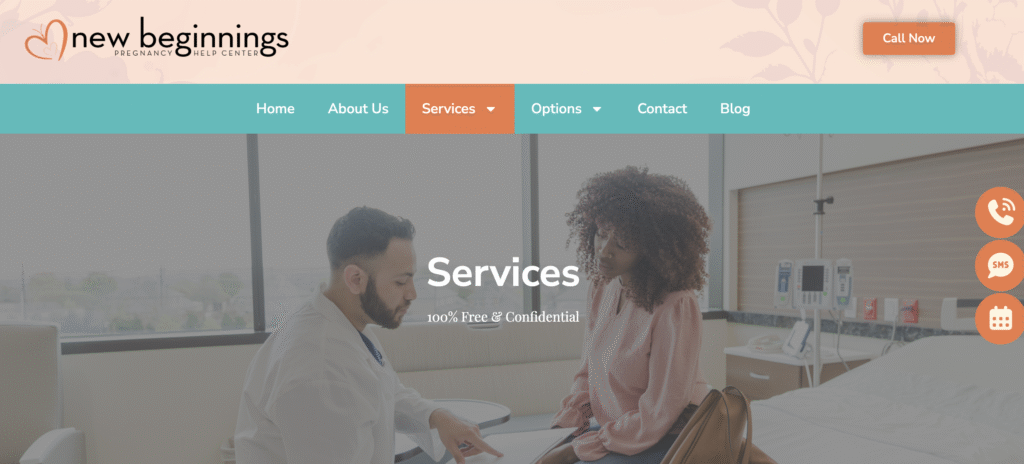
And the Arkansas Department of Health knows this but doesn’t seem to mind. Our state’s highest health authority is directing women to these UPCs under the specific filter of “medical care services” without knowing if those facilities employ a single licensed doctor or nurse. ADH’s categorization provides a false – and dangerous – state validation of medical capacity that entirely ignores the lack of regulation of these UPcs (more to come on the state’s role in our next report on UPCs).
Additionally, these UPCs do not have to abide by HIPPA laws – federal privacy laws that protect personal healthcare information from being shared. Terrifyingly, this means they can collect sensitive personal details, like sexual history, and store it in national databases. There are no rules protecting clients from having their information weaponized against them or from being shared with third parties.
The Actual Crisis
Pregnancy centers are not solving Arkansas’s complicated and worsening maternal health crisis. More than half of the state’s counties lack hospitals with labor and delivery units, including standard obstetric care. Since 2020, seven labor and delivery units have closed in south Arkansas. The institutional burden to provide maternal care now increasingly falls on paramedics. As the Arkansas Advocate reports, emergency medical technicians are seeing an increase in life-threatening emergencies from pregnant women. Such emergencies demand immediate surgical intervention, but many Arkansas women are hours away from facilities with life-saving care.
There’s a stark and deeply troubling contrast between Arkansas’s shrinking labor and delivery care system and taxpayer-funded unregulated pregnancy centers. Rural hospital executives say it’s unfeasible to keep maternity wards open due to dwindling reimbursement rates and the rising cost of care. Yet for two full legislative cycles, the state’s supermajority has allocated millions of taxpayer dollars to UPCs under the guise of reducing maternal mortality. The state is willingly bankrolling an unlicensed and unregulated system that cannot provide true obstetric treatment. At the same time, the hospitals, clinics, and paramedics that provide maternal care are suffering from a financial deficit.
Unregulated pregnancy centers are not the solution to Arkansas’s maternal healthcare crisis. In truth, there isn’t even one solution. Rather these centers are part of the problem – a distinct example of our state’s prioritization of political ideology over real answers for life-threatening problems. Some lawmakers are trying to tackle the worsening situation, but we need more than a handful of legislators working on the issue. The prognosis for Arkansans’ healthcare system, specifically for women, is poor. We need transparency and accountability of our tax dollars. We need true medical and state regulation of so-called pregnancy clinics. And we need data-driven solutions to help pregnant women and new moms. Our health literally depends on it.