
A For AR People series examining how state policy failures, healthcare shortages, and politicking put pregnant women at risk and exacerbate Arkansas’s maternal mortality crisis.
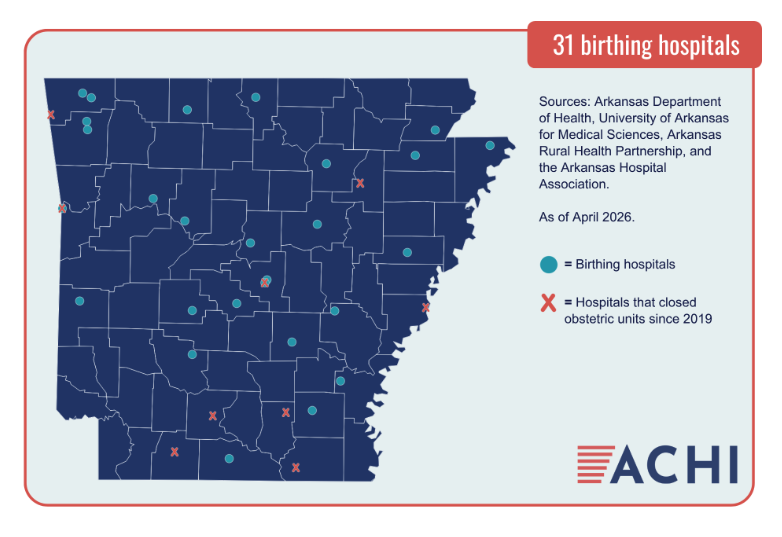
Say you are a pregnant woman in Shirley, AR, deep in rural Van Buren County. You work in the deli at the local Harp’s grocery store where you make $29,000 a year. You and your spouse have one car, and he drops you off in the morning on his way to work in Heber Springs, 50 minutes southeast. You don’t have a local OB/GYN because there are none in the area.
Sometimes the Van Buren County health unit will have prenatal vitamins you can grab, but there are no maternity clinics where you can actually see a doctor to check how your pregnancy is progressing. Your only options for obstetrics are in Batesville or Conway – both towns more than an hour away.
At 30 weeks, in the middle of a shift you can’t afford to miss, your water breaks. Clinton, the closest town, has a hospital but no labor and delivery services. You don’t have insurance, so an ambulance is out of the question. Your husband’s speeding toward you, but he’s 50 minutes away. What do you do?
About 45% of Arkansans live in a rural area. That’s 1.3 million people.
Access to health care is already difficult to come by in these spaces, but add to the equation pregnancy complications, and you can see why Arkansas suffers from one of the worst maternal mortality rates in the nation.
In other words, it’s dangerous to be a pregnant woman or new mom in Arkansas.
Our state’s maternal mortality rate is 38 per 100,000 live births, more than double the national rate of 17 per 100,000 live births. It’s more dangerous to be a pregnant woman in Arkansas than it is to be pregnant in Iran (16), China (16), or Syria (20). Arkansas women are twice as likely to die due to pregnancy-related causes than women in Latvia and women in Armenia.
If you didn’t already know this, you should be shocked to learn these dire statistics.
Even more shocking is that nearly all of these deaths (94%) are preventable. It’s no wonder, then, that addressing these unnecessary deaths is a top priority for advocacy groups as well as some lawmakers.
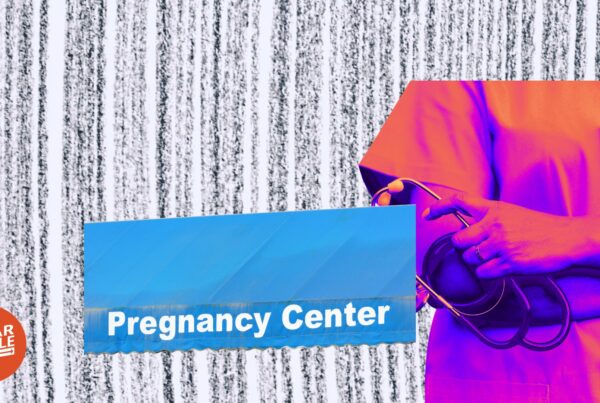
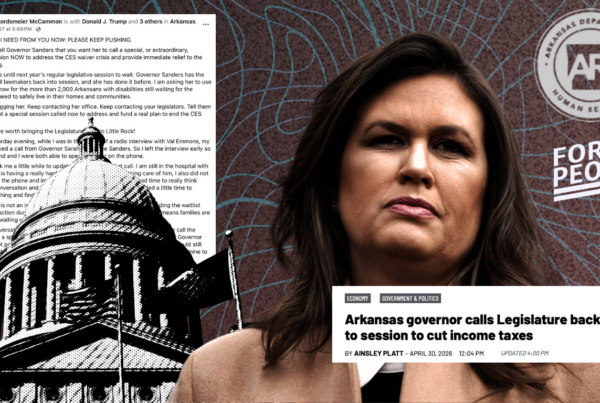
But recent actions from both the executive and legislative branches fall flat. Most recently, Governor Sanders announced the “Claim Your Care” initiative – a public relations campaign to educate Arkansans on county health units and what the Arkansas Department of Health provides residents at these units. Maternity clinics, the state says, are accessible to women across Arkansas and are ready to help “jumpstart” prenatal care for pregnant women.
The sticky point, however, is that county health units are not clinics; they may have some clinic hours, but they do not have OB/GYNs on site. Health units only offer limited services like pregnancy tests, breast care, and referrals to obstetrics providers and labor and delivery units, which are often several hours away. When asked who staffs these units, state Surgeon General Kay Chandler said it’s APRNs, not obstetricians.
The Claim Your Care campaign feels like the state is offering a band aid to women who are dying. It’s low-effort and insulting – women are perishing in Arkansas at more than twice the national average but it’s because we haven’t “claimed our care” yet?
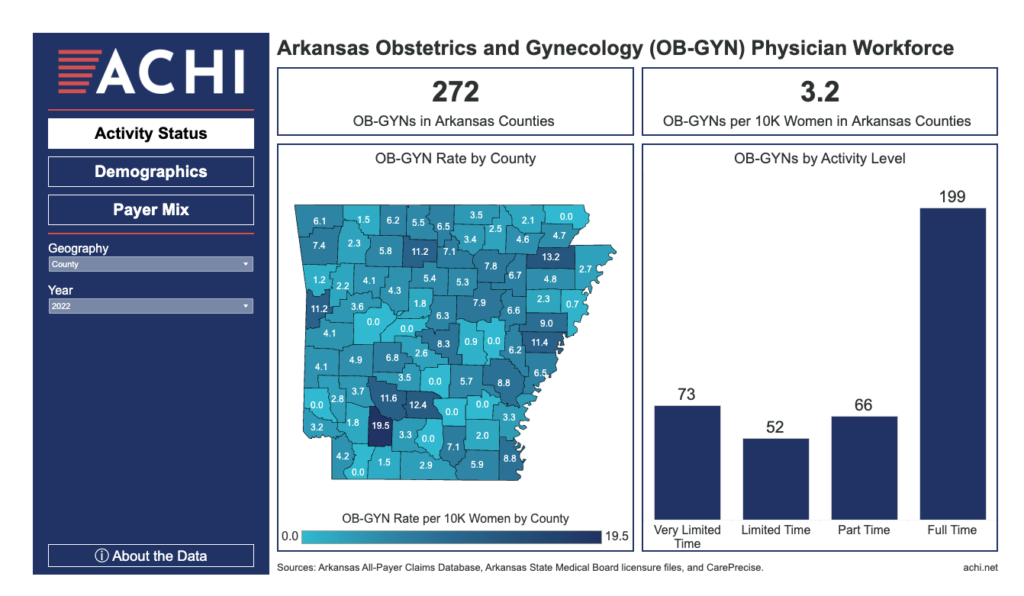
The problem is much more complicated and complex than what the state wants you to believe. We need to be throwing all our resources and energy into saving savable lives, especially in a state that calls itself the “most pro-life” in the country. Preventing death during pregnancy and the postpartum period is solvable, yet the governor still refuses to get behind the easiest policy –– postpartum Medicaid expansion – to help save lives right now. It’s baffling.
For AR People has covered maternal care extensively for the past several legislative sessions. We fully support policies that prevent maternal deaths and make healthcare accessible and affordable for Arkansans.
Additionally, we are deeply committed to connecting the dots on how these policies impact you; considering nearly half of us are women and half of Arkansans live in rural areas, centering the maternal health crisis is essential to the wellbeing of our state.
Over the next several weeks, we will tackle the ins and outs of our maternal mortality crisis head-on: how we got here; what it means for women and their families; who is to blame; what the solutions are and how we forge ahead. At the end of the series, we want you to fully grasp the urgency of the situation and understand that solutions are available and can be implemented now by state leaders with the courage to act boldly.
We have the power to make a difference for women and girls in Arkansas. We hope you tune in, share your thoughts, and join the fight.